
Rudy's story
The gift of sanctuary: when Rudy led the way
Rick and Anne's adult son, Rudy, has Dravet Syndrome. Rudy was referred to our onsite NHS Centre, for review and assessment of his medications. While his Dad was bracing himself for difficult conversations, guided by his son, he has written about how his expectations were exceeded by the kindness and professionalism of the team at Gowers.
My wife, Anne, and I arrived at the Sir William Gower Centre, National Hospital for Neurology and Neurosurgery, prepared for a "month of hassle." To be truthful, that was my view alone; Anne held a more positive perspective.
When you navigate life for a loved one with complex epilepsy, you become conditioned to expect friction: the constant vigilance, the clinical coldness of institutional care corridors, and the exhausting work of advocating for someone while you are on the precipice of burnout. I walked through the doors of the Gower building with my guard up, braced for a two-week endurance test of unfulfilled promises and the inevitable clash of clinical and care systems a struggle where the parent is often the "unqualified referee," unheard through the noise.
To be objective, I had been tainted by the recent experience of Rudy (who has Dravet Syndrome) being served with a Notice of Termination whilst critically ill in hospital. The realisation of the ReSPECT form being double-checked was my lowest point. Through that ordeal, I have learned that an orchard is not truly an orchard until it provides a canopy of genuine shelter for the fruit which needs protection; for too long, we were left exposed.
A month later, we are here at the Epilepsy Society for a review of Rudy’s medications. Rudy has navigated the crossroads of life, and blue skies are finally manifesting. With the outstanding support of the Continuing Healthcare (CHC) team, we are well on our way to securing a "gold-plated" provision; we simply needed to get Rudy to a better place concerning his medications. The stay, after assessment, was refocused on a period of four weeks, not two, and I was very glad of it. This was an opportunity not for Rudy to miss.
Orders from the Dining Room
Anne and I planned to take turns supporting Rudy emotionally during his admission. On my second "stint," arriving for the evening meal, the most unexpected event occurred.
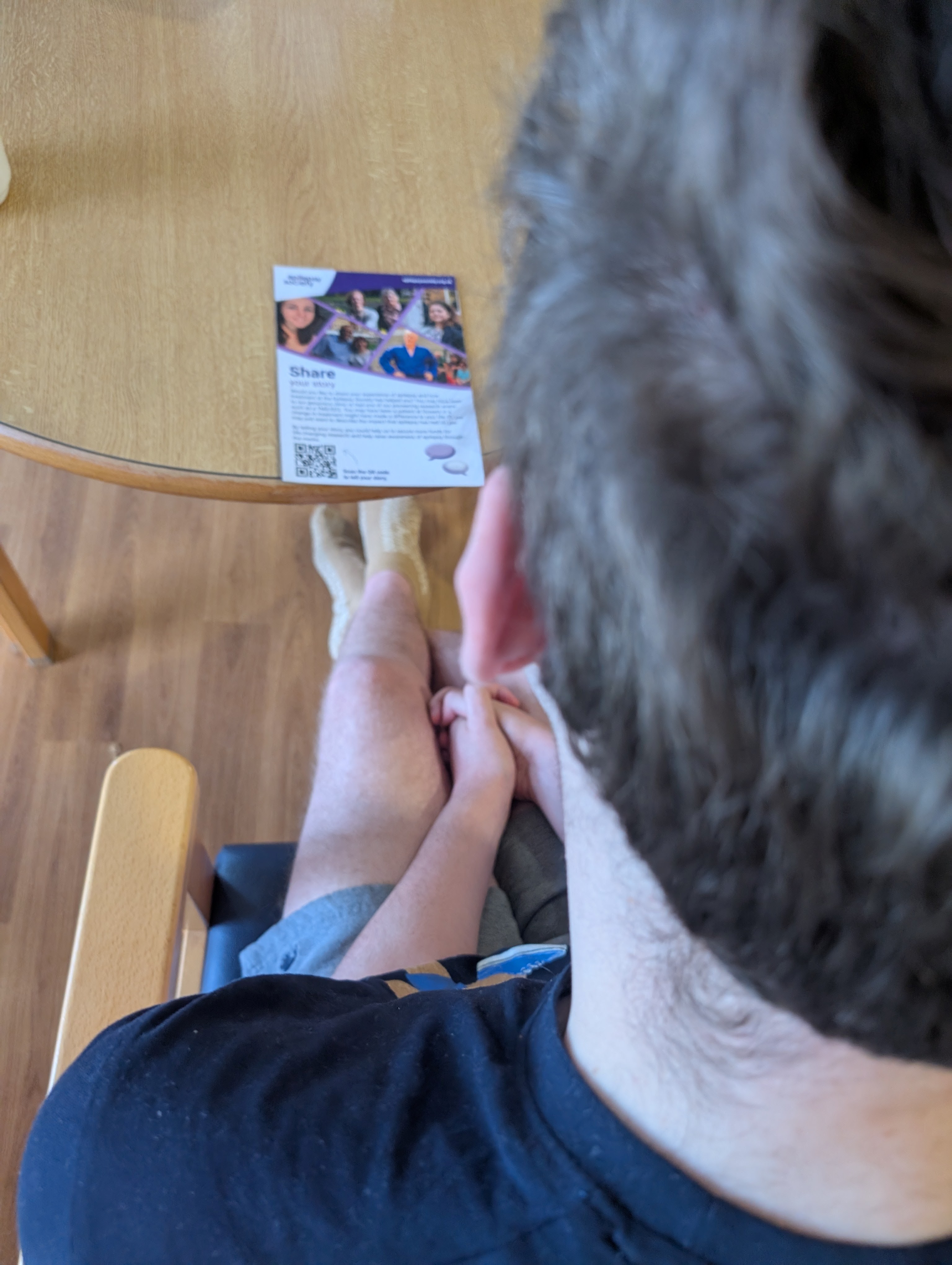
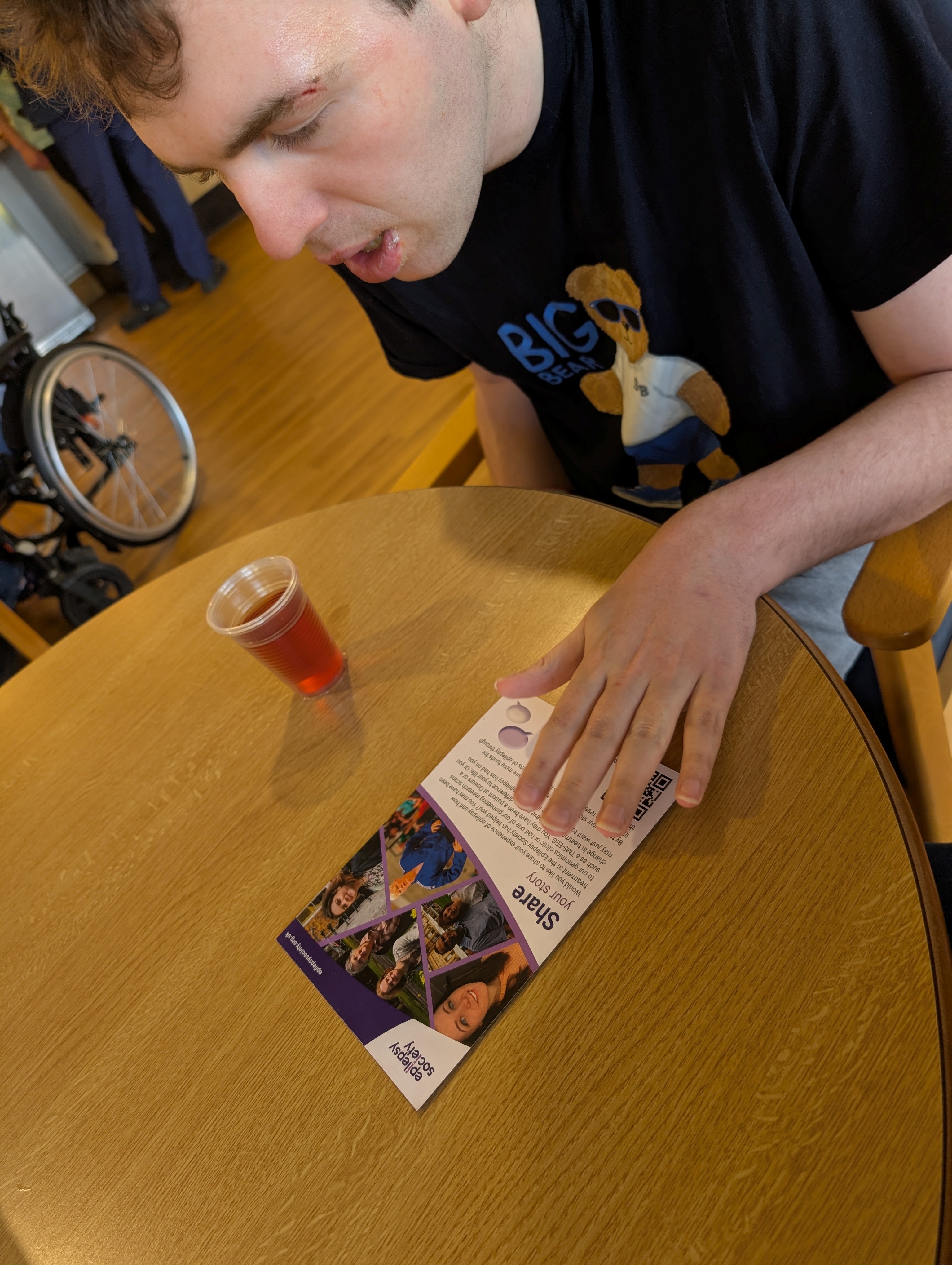
After some days in the dining room at Gower’s, Rudy who has become almost non-verbal in recent years—picked up a leaflet about sharing patient stories. He didn’t just pick it up once; he passed it to me, then another, as if to ensure the message wasn't missed. Had I been emotionally listening?
Initially, I was simply taken aback by his newly discovered motor skills - the gentle, caring way he passed the paper. But as an ex-military person, I realised I shouldn’t have waited for a third "briefing." Rudy was giving me my orders: it was time to act and share his story of this sanctuary.
The Power of Social Dignity
The friction I expected vanished within the first week. I should have listened to Anne’s intuition regarding the "world-class" wherewithal at the centre. I found myself watching the staff - at every level and profession - moving together in unity like a boat race crew. There would be no "catching a crab" here; they moved with a level of expert grace I hadn’t dared to hope for. It was teamwork in action for the common cause of supporting each and all.
I realised I wasn’t bracing myself anymore. The heavy weight of being a "sentry" for Rudy’s safety was finally shared by a team who didn’t just see a patient - they saw Rudy, the person. It is a truly people-centred organisation; those aren't just words on a brochure or in an organisational policy, but a tangible, evidenced reality. At first, the feeling was almost "alien," such was the contrast to our recent battles.
The Golden Bolt
The most striking "small win" happened at the dinner table. For years, mealtimes in care settings have been a battle of wills where we, as parents, were Rudy's only anchor. But here, Rudy began to connect. I watched him engage with an eclectic group bound together by the "golden bolt" of epilepsy - an invisible, ever-present charge that joins everyone here in a shared understanding.
When I stood up to get a juice, Rudy stayed. He remained at the table, content and safe within the "full team." It is our belief that this was not just the rebalancing of his medication starting to take effect, but also the culture of genuine care throughout the centre.
A Sanctuary for the Whole Family
As Anne and I look forward to our second week, we recognise that this month is a milestone. It is not just about the rebalancing of Rudy's medication; it is about the rebalancing of ourselves. I willingly put my hands up. I am happy to surrender my angst. My mental health feels to be moving in a better direction.
As a parent and Power of Attorney, my view has been fundamentally changed in less than seven days. The staff are incredible and watching them and adopting some of their behaviours has made me a better "caring" person. This sanctuary is allowing for the reduction of the "anger" carried through years of struggle. I have taken time to speak to others supporting their loved ones here; it is perhaps not so extraordinary that we all have similar stories of "fighting the system."
Rudy knew what he was doing when he handed me that leaflet. He found a place where he could belong, and in doing so, he gave Anne and me the gift of peace of mind. To the team at the Epilepsy Society: thank you for turning a challenge into a sanctuary. It is, quite simply, priceless.