
Running the Course, Simon's story
Embracing Life with Epilepsy, Brain Surgery, and a Positive Mindset
Diagnosed with epilepsy, aged seven, Simon has shown remarkable strength and determination despite the challenges of living with drug resistant epilepsy. In 2018 Simon underwent brain surgery as he was at a higher risk of sudden unexpected death by epilepsy (SUDEP) which has reduced the volume of seizures, but he still experiences them regularly.
In his memoir, Embracing Life with Epilepsy, Brain Surgery and a Positive Mindset, Simon explores how epilepsy has affected him personally, professionally and socially. He fell into a deep depression after his brain surgery but in this book he demonstrates how he has found daily rituals, running and listening to inspirational speakers as well as the love and support of his wife and family has helped him live life to the fullest.
Simon writes honestly about the impact of epilepsy during his childhood where he would often feel sick and become disoriented not aware that these moments were linked to his seizures. He said: “It felt like a ticking time bomb inside me—a volcano ready to erupt. The unpredictability of when a seizure might strike was daunting, yet paradoxically, once it happened, there was a sense of relief that allowed my body to reset and continue life as usual.”
“I recall the times following a tonic-chronic seizure when I would find myself hiding beneath the stairs, overwhelmed by pain and emotion, wishing for my condition to vanish. With my head spinning, my tongue bitten raw, and sometimes bearing black eyes from the physical impact of seizures, the aftermath was often a battle of both body and mind.”
As an adult, Simon kept his epilepsy private and when people did find out, he’d treat it humorously; “ As a young person grappling with epilepsy, I developed coping mechanisms that seemed like survival strategies at the time. One of my earliest conclusions was to avoid discussing my condition altogether. It felt like a solitary path, and I didn't know who to turn to for support. The prevailing sentiment was to simply get on with life since it was just "a fit now and again."
However, as I grew older, my epilepsy changed alongside me, becoming more complex and pronounced. People around me were often frightened by the unpredictability of my seizures, and their well-meaning suggestions to avoid certain activities only fuelled my determination to prove them wrong. To cope with these situations and the emotional turmoil of feeling misunderstood, I began to make light of my condition, using humour as a shield to hide the fact that I was struggling internally. I couldn’t let anyone see that I wasn’t coping as well as I pretended to be.”
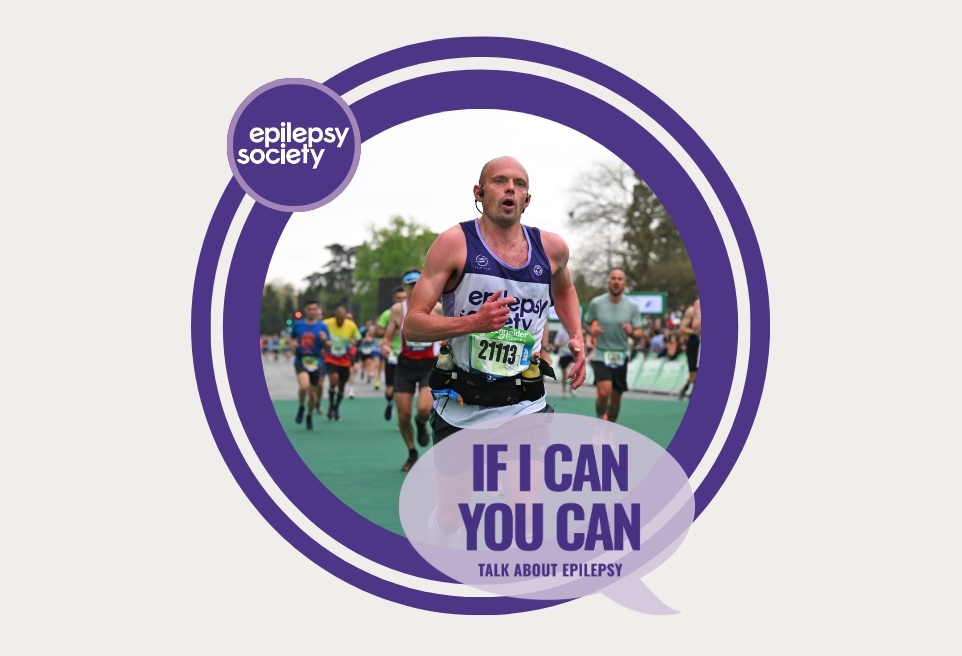
Simon was able to manage his seizures reasonably well and was able to work full-time as a community support worker and also volunteer as a football coach. He was still experiencing tonic-clonic seizures but in 2012 he had a seizure at work. Fortunately, he was well-supported by his employer and still continues in his profession, even though he has to visit clients by using public transport or walking but it prompted him to invest in private medical care.
Brain surgery
After many tests and scans, including time at the NHS Chalfont Centre here at the Epilepsy Society, it was identified that Simon had a scar on his brain that was causing his seizures. He was told he was a suitable candidate for brain surgery, albeit with a 5% risk of stroke and a 75% chance of memory loss, depression, or even death. Alternatively, continuing with medication might not control the seizures, potentially leading to worsening epilepsy, increased risk of sudden death epilepsy, more time off work, potential job loss, or an inability to enjoy life’s activities—living with a condition that would progressively require more support.
Simon’s surgery was successful in reducing the number of seizures but he is still not seizure free. He said; “Severe memory loss became a significant challenge. I found myself putting milk in the cupboards, unable to remember anyone’s names, the alphabet, or even how to get to my stepson’s house, which was only 800 yards away. My mental health took a sudden turn for the worse. I felt lonely inside, isolated, and as though no one wanted to hear my story. I was still in pain, not realising at the time that I was becoming depressed.”
Embracing Positivity
“After my surgery and the challenging recovery period, I realised that I needed to clear the mental weeds that had taken root in my mind. It all started with a referral to a life coach. During our initial conversation, the call handler listened intently to my story. She then suggested something unexpected: "You need to listen to motivational speakers on YouTube. Awaken the beast within."
While Simon was initially sceptical, he now listens to a motivational speaker daily and runs five days a week. He has set new goals for himself, one being sharing his own story to inspire others to overcome their own challenges.
At the conclusion of his book Simon says: “May this story inspire you to take action, believe in your potential, and pursue your dreams with unwavering determination. I invite you to discover the power of your "why." Your "why" is the driving force behind your actions. It's the reason you wake up each morning with determination and the compass that guides you through adversity. When the journey becomes tough, your "why" will be the beacon that lights your way.”
Simon’s lessons
- Be honest with your close family members about your condition. Their understanding and support are crucial.
- Inform work colleagues of your epilepsy, the symptoms, the risks, and how best to support you.
- Carry a medical ID card that provides essential information about your condition.
- Keep a seizure diary to track what happens, how often seizures occur, and identify any specific triggers.
- Consider whether some kind of alarm or tracking device would be useful for you.
- Explore options for making your home safer. Your local authority may provide assistance, often involving an assessment by an occupational therapist.
You can order Simon's book here: https://amzn.eu/d/06bJe6Gt