

Neuropsychology and neuropsychiatry
Our team of skilled technicians carry out detailed tests to help with the diagnosis and classification of seizures.
Neuropsychology
Your consultant will refer you for a neuropsychological assessment so that you can undergo tests to ensure you receive the best possible treatment for your epilepsy. Sometimes the results of an assessment can be used to help the medical team work out where in the brain your seizures start.
There are many reasons why you may have been referred for an assessment:
- You or your family may have concerns about your memory or concentration.
- If you are starting a new drug for your epilepsy, and your consultant wants to check for side effects.
If you are concerned about your memory, you can ask your GP for a referral to your local neuropsychology service.
What do the tests involve?
A neuropsychological assessment usually takes between one and three hours. Each assessment is different, so your tasks may not be the same as someone else’s.
Most assessments will include:
- memory tests;
- reading and drawing tasks; and
- puzzles.
If you wear reading glasses, it is important to bring these with you. If you have problems with sight, hearing or holding a pencil, we will modify the tests for you.
Can I pass or fail?
No. There is no pass or fail mark. Try your best. This helps us understand what you find easy and what you find difficult.
When will I get the results?
The tests take some time to score and need to be analysed by a consultant neuropsychologist. You will usually not get your results on the day of your assessment. Your results will be given to the consultant who referred you and they will explain the results at your next appointment.
More information
If you have any further questions, please call the number on your appointment letter and a psychologist will get back to you as soon as possible.
Neuropsychiatry
We provide expert evaluation of emotional and behavioural disturbances and of mental health problems occurring in the context of epileptic and non-epileptic seizures.
We work with people with learning disabilities and complex epilepsy. We may take part in care planning meetings and work with GPs, neurologists, nurses, psychologists, speech and language therapists, and art therapists.
Epilepsy Society is grateful to Tom Brighton, Business Manager – Medical Services, Epilepsy Society, who reviewed this information.

Research
The ultimate goals of our current research are to spearhead personalised treatment and to incorporate genomic diagnosis into the NHS for people with epilepsy.

Genomics
Read how we are working to understand the genetic architecture of each individual person's epilepsy through our world leading genomics research programme.

Neuroimaging
Neuroimaging enables us to look deep inside the brain to learn more about the impact of seizures on its structure and function.
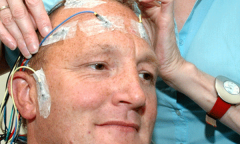
Having an electroencephalograph (EEG) at our EEG Telemetry Unit
The following information should tell you everything you need to know about having an EEG at our EEG Telemetry Unit.